30 May 2026
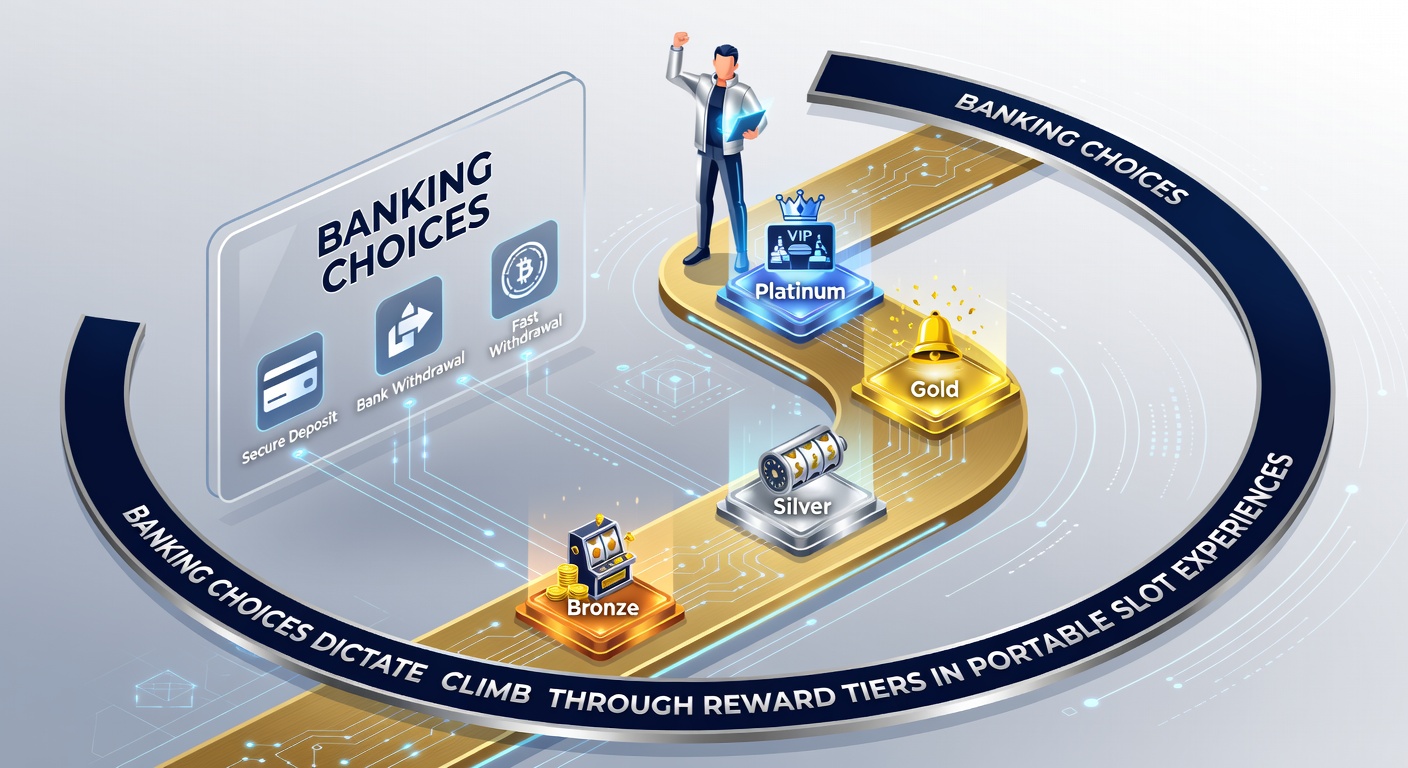
Banking Choices Dictate the Climb Through Reward Tiers in Portable Slot Experiences

Banking selections shape how quickly participants advance through loyalty structures in mobile slot platforms, where deposit methods determine transaction processing times and subsequent point accumulation rates. Electronic wallets often complete transfers in seconds while traditional bank transfers may require hours or days, creating measurable differences in when loyalty credits activate and tier thresholds become reachable. Research from the Australian Gambling Research Centre shows that payment velocity correlates directly with reward velocity in digital gaming environments across multiple jurisdictions.
Payment Speed and Tier Progression Mechanics
Portable slot applications track player activity through deposit frequency and volume, yet the underlying banking infrastructure dictates when those actions register within the system. Instantaneous methods such as certain digital wallets allow immediate crediting of funds, which in turn triggers loyalty point awards without delay, whereas slower options introduce gaps that extend the time needed to reach higher reward brackets. Observers note that players using faster channels frequently report crossing into premium tiers weeks ahead of those relying on conventional bank routes.
Data indicates that transaction confirmation speed influences not only initial access but also the compounding effect of consecutive deposits. When funds land quickly, players maintain momentum in daily login streaks and promotional multipliers that accelerate tier advancement. Slower methods break these chains, requiring additional time to rebuild progress toward elevated reward levels that unlock enhanced free spin allocations and cashback percentages.
Transaction Fees and Net Contribution Calculations
Some banking providers impose processing charges that reduce the net amount reaching a player's account, directly affecting the contribution totals used to calculate loyalty points. Platforms apply contribution formulas based on deposited sums, so fees that shrink those sums translate into fewer points per transaction and slower overall ascent through tiered structures. Industry reports from the Nevada Gaming Control Board highlight how fee structures vary widely by method, creating strategic considerations for participants aiming to optimize their progression paths.
Digital payment services with minimal or zero fees preserve more of the original deposit for point generation, while certain card networks or wire services deduct percentages that erode contribution value. Those differences compound over multiple transactions, widening the gap between players who select low-cost options and those who do not. Figures reveal that even small percentage variations produce substantial disparities in cumulative loyalty balances after several months of regular play.
Regional Regulatory Influences on Banking Integration
Regulatory frameworks across different regions govern which payment processors may integrate with licensed gaming platforms, thereby shaping the available banking choices for mobile slot participants. In jurisdictions where e-wallet partnerships receive streamlined approval, players gain access to faster deposit pathways that support quicker tier climbs. Malta Gaming Authority guidelines, for instance, emphasize secure and efficient transaction protocols that encourage adoption of verified digital methods over slower alternatives.
Cross-border players encounter additional layers where currency conversion times and intermediary banking rules further influence reward progression timelines. May 2026 brought several new slot releases incorporating enhanced loyalty interfaces that display real-time contribution updates tied to specific payment confirmations, allowing participants to monitor how their banking decisions affect tier status more transparently than previous system designs permitted.
Case Examples of Method-Driven Progression Differences
One documented pattern involves players switching from bank transfers to instant e-wallets mid-cycle and subsequently advancing two full reward tiers within a single month, whereas previous months using slower methods yielded only partial progress. Another instance shows how debit card deposits with instant authorization enabled consistent daily contributions that triggered bonus multipliers unavailable to those awaiting bank clearance windows.
These patterns align with findings from the Canadian Gaming Association indicating that payment method selection functions as a controllable variable within reward optimization strategies. Participants who align their banking tools with platform processing capabilities consistently achieve higher tier placements over equivalent time periods compared with those using mismatched or delayed options.
Conclusion
Banking infrastructure continues to serve as a foundational element determining reward tier trajectories in portable slot environments, with processing speed, fee impact, and regional availability creating measurable variances in player progression. As new slot titles launch and loyalty systems evolve, the relationship between transaction choices and tier advancement remains a central factor shaping participant outcomes across mobile platforms.